
Chinese Steamed Buns Mantou
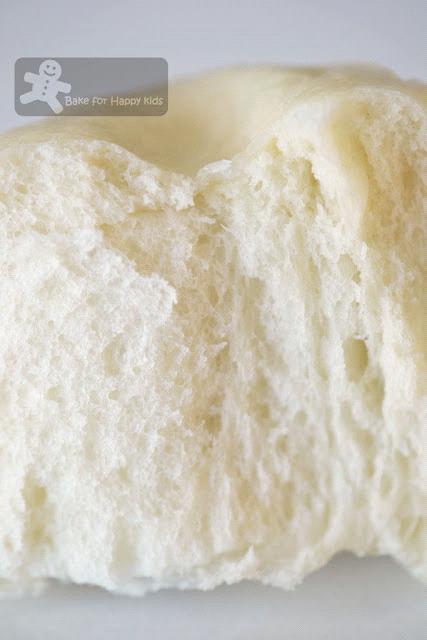
We love mantou (馒头). We love it so much that we can eat it even on its own. Plain and simply white and fluffy! - That is what we after...
Ingredients
| — | flour (with 7-8% protein) |
| — | yeast |
| — | water |
| — | salt |
| — | milk |
| — | sugar |
| — | wheat germ |
| — | milk powder |
| — | soya milk |
| — | oil |
Instructions
Mantou? If you are not familiar to Chinese food, mantou might be totally new to you. According to Wikipedia, mantou is commonly known as Chinese steamed bread buns. They are typically eaten as major carbohydrate source in northern parts of China where wheat is mainly grown rather than rice.
Typically, mantou are made with milled wheat flour, water and leavening agents. The shapes and sizes of mantou can vary depending on preference. The restaurant-style ones are often smaller and more delicate and can be also deep-fried. Pre-cooked mantou are usually available in the frozen section of Asian supermarkets, readily to serve by steaming or heating in the microwave oven.
Although this is my first time making mantou at scratch, I have been researching on a few steamed buns recipes. I've been wondering which recipe is the most ideal one to use and reckon that the success of making a good mantou depends on the leavening agents and type of flour used. Generally, the leavening agents used are either yeast, baking powder or baking soda. For a start, I'm attempting these two well-reputed yeasted-mantou recipes adapted from the book, The First Book of Noodles for Beginners by Carol (in Chinese language). Why these recipes? Unlike most Chinese steamed buns recipes that use shortening for smoother texture, I love these mantou recipes because they don't contain any shortening at all. Both yielded two very different types of mantou; one is the plain basic one that uses plain finely-milled flour and the other one is the soy one using wheat germ and soya milk for a different texture and taste.
The type of flour used can create different mantou textures. For white, fluffy, fine and smooth kind of texture, I prefer to use Hong Kong flour or finely-milled flour with 6-8% protein content. For more details on which types of flour to make steamed buns, please refer to this post by Miss B from Everybody Eats Well in Flanders.
As I was shopping for the right flour to use, I was wrong at first assuming that all flours with pictures of Chinese steamed buns are same being the finely-milled ones to use. After scrutinizing their contents carefully, I realised that some brands are pre-packed with a mixture of flour and its suggested leavening agents. For the two recipes that I used, I would recommend using only plain finely-milled flour with NO leavening agents added.
Both mantou are delicious and taste unique being two different kinds! After eating these mantou, I was totally convinced that both of these mantou recipes doesn't need any shortening at all. Especially the plain mantou... They are plain, simply white and fluffy! And this is what we after...
PLAIN MANTOU (Makes 8-10)
Overnight sponge - make approximately 100g (60g flour with 7-8% protein, 1/8 tsp yeast, 35ml water, a small pinch of salt): Knead dough for 7-8 mins until smooth. Place dough in a greased bowl and allow it to prove overnight in the fridge.
Then combine the 100g overnight sponge with 300g flour (7-8% protein), 1/2 tsp yeast, 170ml milk (doesn't have to be scalded), 30g sugar and 1/8 tsp salt, plus 5-10g flour to use while rolling the dough to create a smooth texture.
- Using a bread maker, mix all ingredients and knead into a smooth dough and allow it to prove for 1-2 hr. At this point, you can either store the dough in the fridge to use it on the next day or use it now.
- Roll into a large rectangle sheet with 0.3cm thickness and smoothen its surface with the excess 5-10g of flour.
- Start rolling the sheet along the longer side of the rectangle and roll it into a Swiss-roll-like rod and cut into 8-10 equal pieces.
- Place on steaming rack lined with baking paper or any non-stick paper and place the rack under lukewarm water (about 37°C) and let it prove for 40 mins or double the size.
- Steam buns for 15 mins. At the last 3 minutes of steaming, use a chopstick to lift the cover of the steamer slightly to form a small opening.
- Turn off heat immediately after steaming. Allow all excess steam to escape through the small opening for 3-5 mins. Remove the steaming racks and allow buns to rest for 3-5 mins before opening the baskets cover. These finishing steps help to avoid sudden change of temperature leading mantou to develop wet crinkled surfaces.
SOYA MANTOU (Makes 6-8 slightly smaller mantou)
Ingredient A: 200g flour (7-8% protein), 115ml water, 1/2 tsp yeast. Ingredient B: 65g flour (7-8% protein), 1 tbsp wheat germ, 1 tbsp milk powder*, 35ml soya milk*, 2 tbsp sugar, 1 tbsp oil, a pinch of salt. *Please note that the original recipe uses 1 tbsp soy powder and 35ml milk but I have used milk powder and soya milk instead. I reckon the addition of soy powder might enhance further the taste of soy as the soy flavours in these buns are not straightaway obvious.
- Using a bread maker, mix all ingredients A and knead into a smooth dough and allow it to prove for 1-2 hr or double in size.
- Using a bread maker, knead in all ingredient B until smooth. At this point, you can either store the dough in the fridge to use it on the next day or use it now. Roll into a large rectangle sheet with 0.3cm thickness.
- Start rolling the sheet along the longer side of the rectangle and roll it into a Swiss-roll-like rod and cut into 6-8 equal pieces.
- Place on steaming rack lined with baking paper or any non-stick paper and place the rack under lukewarm water (about 37°C) and let it prove for 40 mins or double the size.
- Steam buns for 15 mins. At the last 3 minutes of steaming, use a chopstick to lift the cover of the steamer slightly to form a small opening.
- Turn off heat immediately after steaming. Allow all excess steam to escape through the small opening for 3-5 mins. Remove the steaming racks and allow buns to rest for 3-5 mins before opening the baskets cover.