
Homemade Ham from a Whole Pork Neck
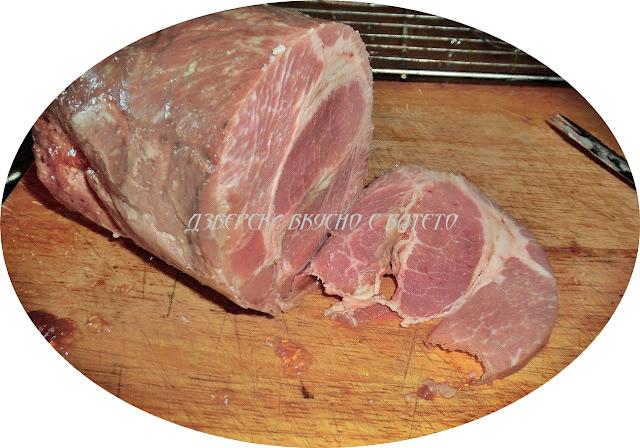
A tender, juicy homemade cooked ham pressed from a single whole pork neck, injected with an aromatic wine brine and cured in the ham maker.
⏱️ Prep: 40 min🍳 Cook: 120 min
Ingredients
| 1 kg | whole pork neck | |
| 22 g | salt (ideally nitrite curing salt) | |
| 2 | bay leaves | |
| 1 tbsp | 15 ml | sugar |
| 2-3 | allspice berries | |
| 2-3 | black peppercorns | |
| 3-4 g | ground white pepper (optional) | |
| — | juniper berries (optional) | |
| 1 tbsp | 15 ml | soy sauce (optional) |
| 100 ml | water | |
| 100 ml | white wine |
Instructions
- With a sharp knife, trim the pork neck into a cylinder that fits the shape of the ham maker. No fussy shaping is needed — cut a piece roughly the width of the ham maker and pack it in well.
- Combine all the marinade seasonings in a small saucepan, bring to a good boil, then let cool and strain through a sieve lined with kitchen paper.
- Inject the cooled brine into the meat — aim for about 20% of the total weight injected inside the meat for juiciness. Place the meat in the ham maker and pour any leftover brine on top.
- Close the lid and refrigerate for at least 48 hours.
- Cook using the standard ham-maker procedure: a water bath for about 2 hours, keeping the water temperature in the recommended range. The ideal core temperature is 70–72 °C (the author settles on 71 °C); an internal probe should read there. Keep water out of the ham maker so the juices are not lost.
- As soon as the core temperature is reached, remove and shock-chill quickly in ice-cold water for about 30 minutes.
- Refrigerate for at least 24 hours before unmoulding — this rest is essential. The ham sets into a lovely jelly.
- Carefully remove the whole piece, clean off the jelly, chill and slice. The cut surface may look slightly grey after resting (no preservatives/colourants) but the good colour returns when re-sliced; it does not affect the taste.
Tip: A ham maker isn't strictly required — the meat can instead be tied into a blind casing, a roasting bag, or a cake tin, then simmered in a pot at 75–80 °C (insert the probe after about 1.5 hours), always keeping pot water from getting inside the meat.