Kung Pao Shrimp
Kung Pao Shrimp (gong bao xia ren, 宫保虾仁) is a classic Sichuan dish, easy to make, and great to serve with white rice because the taste is flavorful, complex, and well-balanced. As a variant of kung pao chicken, one of the differences is that this dish is deep-fried, and kung pao chicken is stir-fried, so the shrimp is slightly crispy and coated with a glossy sauce.
⏱️ Prep: 30 min🍳 Cook: 20 min
Ingredients
| 454 g | peeled and deveined shrimp |
| 1.9 g | salt |
| 0.8 g | ground white pepper (or to taste) |
| 11.7 g | Chinese cooking wine |
| 7.5 g | cornstarch (for marinade) |
| 80 g | cornstarch (for coating) |
| 56 g | sugar |
| 3.8 g | cornstarch (for sauce) |
| 33 g | soy sauce |
| 40 g | Chinese black vinegar |
| 45 g | water |
| 330 g | oil |
| 60 g | peanuts |
| 12 g | garlic (about 4 cloves) |
| 8 g | ginger (about 1/2 inch) |
| 60 g | scallions (about 4) |
| 8 g | dried red chilies |
| 2.3 g | Sichuan peppercorn powder |
| 16 g | Sichuan dou ban jiang (fermented chili bean paste) |
Instructions
To marinate the shrimp:
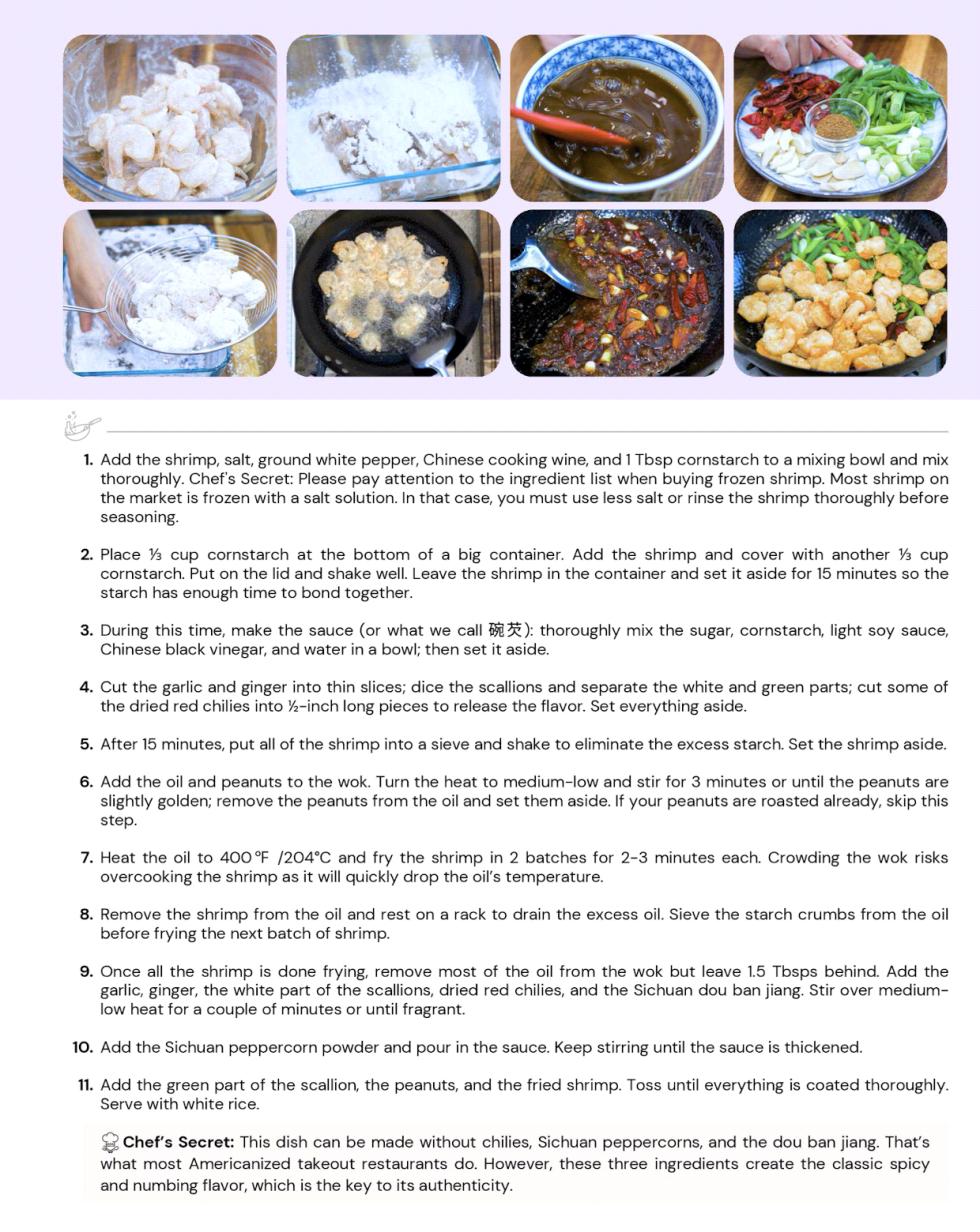
- Add the shrimp, salt, ground white pepper, Chinese cooking wine, and 1 Tbsp cornstarch to a mixing bowl and mix thoroughly. Chef's Secret: Please pay attention to the ingredient list when buying frozen shrimp. Most shrimp on the market is frozen with a salt solution. In that case, you must use less salt or rinse the shrimp thoroughly before seasoning.
- Place 1/3 cup cornstarch at the bottom of a big container. Add the shrimp and cover with another 1/3 cup cornstarch. Put on the lid and shake well. Leave the shrimp in the container and set it aside for 15 minutes so the starch has enough time to bond together.
- During this time, make the sauce (or what we call wan zhi, 碗芡): thoroughly mix the sugar, cornstarch, light soy sauce, Chinese black vinegar, and water in a bowl; then set it aside.
- Cut the garlic and ginger into thin slices; dice the scallions and separate the white and green parts; cut some of the dried red chilies into 1/2-inch long pieces to release the flavor. Set everything aside.
- After 15 minutes, put all of the shrimp into a sieve and shake to eliminate the excess starch. Set the shrimp aside.
- Add the oil and peanuts to the wok. Turn the heat to medium-low and stir for 3 minutes or until the peanuts are slightly golden; remove the peanuts from the oil and set them aside. If your peanuts are roasted already, skip this step.
- Heat the oil to 400 degrees F / 204 degrees C and fry the shrimp in 2 batches for 2-3 minutes each. Crowding the wok risks overcooking the shrimp as it will quickly drop the oil's temperature.
- Remove the shrimp from the oil and rest on a rack to drain the excess oil. Sieve the starch crumbs from the oil before frying the next batch of shrimp.
- Once all the shrimp is done frying, remove most of the oil from the wok but leave 1.5 Tbsps behind. Add the garlic, ginger, the white part of the scallions, dried red chilies, and the Sichuan dou ban jiang. Stir over medium-low heat for a couple of minutes or until fragrant.
- Add the Sichuan peppercorn powder and pour in the sauce. Keep stirring until the sauce is thickened.
- Add the green part of the scallion, the peanuts, and the fried shrimp. Toss until everything is coated thoroughly. Serve with white rice. Chef's Secret: This dish can be made without chilies, Sichuan peppercorns, and the dou ban jiang. That's what most Americanized takeout restaurants do. However, these three ingredients create the classic spicy and numbing flavor, which is the key to its authenticity. Ingredient Tips: The peanut is the key element of the kung pao dishes. If allergic, use walnuts or almonds. Chinese black vinegar can be replaced by white or rice vinegar, but you will miss some distinctive fermented taste. Non-alcohol replacements for Chinese cooking wine vary from recipe to recipe. For this particular dish, you can use 1 tsp ginger juice + 1.5 tsps water.