
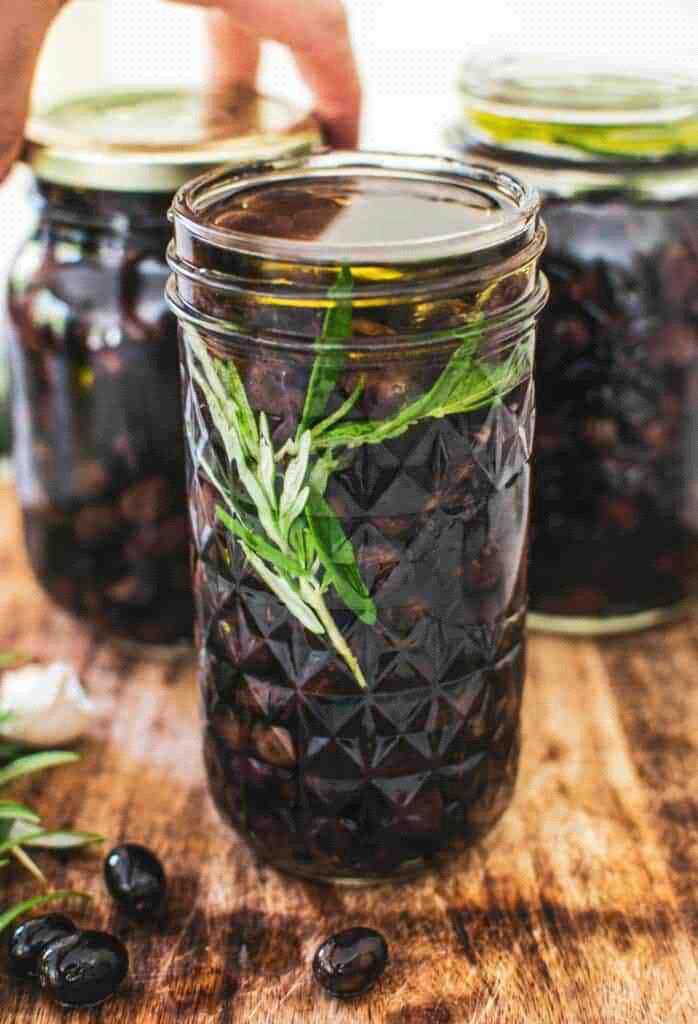
Greece — Brine for Olives / Brine Cured Olives
Greek-style curing of olives in salt brine. Dated Monday, 25 July 2022, 13:22. Sources: https://homegrownhappiness.co.nz/salt-brine-cured-olives/ and https://localfoodconnect.org.au/curing-black-olives/ (the latter with a Kalamata brine).
Ingredients
| — | Olives |
| — | Coarse salt (rock or sea salt) — 1 part salt to 10 parts water (10% brine) |
| — | Water (preferably non-chlorinated) |
| — | Vinegar (for the finishing 2:5:20 vinegar brine) |
| — | Olive oil (to cover) |
| — | Herbs, spices and lemon slices (optional) |
Instructions
Author's notes (Bulgarian): Water for no more than 14 days up to 3 weeks but no longer, changing it daily up to a maximum of every 2 days. Nothing metal in the water. Change the water with salt, then weekly. Cover the salt water with olive oil to stop the oxygen flow. They sit in the salt for about 2 months. They don't need to be cold, just in the dark at a constant temperature — I can keep them in the wardrobe. Ratio: 1 part salt (coarse crystal salt like sea salt) to 10 parts water. 8 months. The olives must be completely covered.
MAKING THE BRINE: Let's say we're using a 12 litre bucket to brine our olive harvest. You're going to need about 4 litres of 10% brine. To make 4 litres of 10% brine, mix 4 litres of water (preferably non-chlorinated) and 400 g of salt, for a 1:10 ratio of salt to water — that's your 10% brine. It's all about mixing 10% salt by weight with the amount of water you estimate you'll need: 100 g of salt for 1 litre of water, 200 g for 2 litres, and so on. Tip: add the salt to a separate container, boil 1/4 of the water you need and pour that over the salt, stir to dissolve, then add the other 3/4 of cold water — you'll end up with a lukewarm brine. Once the brine is ready, pack your olives into a clean jar (squish them down; the tighter the better) and pour the cooled brine over until submerged. Add a plate or mesh on top to keep them submerged.
STORING: Keep the olives somewhere dark and temperature-stable. The bottom of a cupboard is fine. Taste after 2 months and get to know the taste — you'll get a feel for when they're right. 2 months to a year is the spectrum.
SLITTING AND SOAKING: How long curing takes depends on this step. You can slit the olives or leave them whole. Slitting lets water and salt penetrate faster and remove bitterness; whole olives need much longer. To slit, cut a little slit in each with a sharp knife. Alternatively 'crush' them with a heavy object (a meat tenderiser or flat stone) — just enough to break the skin, not flatten them. Give them an initial soak in plain water for 2-3 days, changing the water daily, keeping them fully submerged.
HOW TO CURE: After soaking in water, soak in brine. Use a simple 1:10 salt-to-water ratio with unprocessed salt (rock or sea salt). Cover the olives with brine in a bucket, jar or container with a lid, fully submerged (an upside-down plate holds them down). Loosely seal the lid; open every couple of days for the first week to release gases (or use an airlock). Slit/crushed olives may only need 1-2 months; whole olives 6 months or longer.
CHANGING THE BRINE: Check weekly. If the olives stay submerged with no mould, the brine doesn't need changing. If mould grows, tip out the brine, rinse the olives well and make fresh brine. Changing weekly leaches bitterness faster. Taste after a month or so; if still too bitter, keep soaking until happy.
BOTTLING: Once the bitterness is gone, jar the olives in sterilised jars. A vinegar brine at a 2:5:20 ratio of salt:vinegar:water — e.g. 40 g salt, 100 g vinegar, 400 g water makes about half a litre. Cover the olives with the vinegar brine and flavourings, submerged, then pour over a thick layer of olive oil to stop oxygen touching them. Screw on the lids and let sit a week to infuse before sampling.
AFTER THE BRINE STAGE: Once ready and drained of the (now very bitter) brine, decide how to store: in olive oil, in 50:50 vinegar and water, or in a fresh 10% brine in the cupboard for up to 6 months. Adding herbs, spices and lemon slices now is good. You can also smoke them! Or just eat them. Stored in a sealed jar they keep up to 6 months in a cool dark place, or up to a year in the refrigerator. Once opened (no longer under the oil), use within 3 weeks. Try them on focaccia!