Make Dumplings From Scratch
A Chinese technique guide to choosing the right flour and adjusting the water-to-flour ratio for perfect homemade dumpling dough.
Ingredients
| 400 g | High-gluten / bread flour |
| 200 g | Room-temperature water |
| 1 | Egg (optional, if only low-protein flour is available) |
Instructions
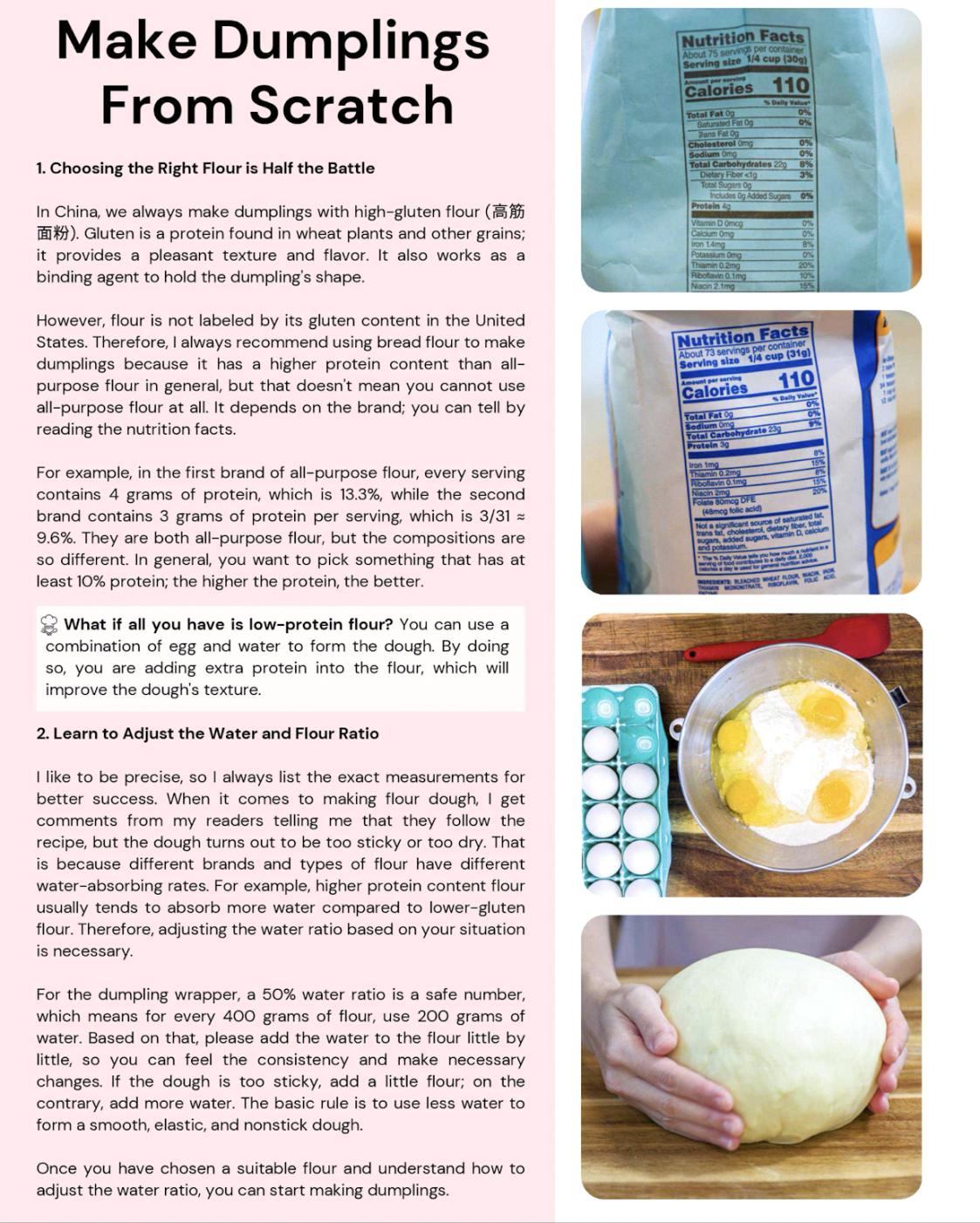
- Choosing the Right Flour is Half the Battle. In China, we always make dumplings with high-gluten flour (gao jin mian fen). Gluten is a protein found in wheat plants and other grains; it provides a pleasant texture and flavor and works as a binding agent to hold the dumpling's shape. In the United States flour is not labeled by its gluten content, so I recommend using bread flour because it has a higher protein content than all-purpose flour in general. It depends on the brand; you can tell by reading the nutrition facts. For example, one all-purpose flour brand has 4 grams of protein per serving (13.3%) while another has 3 grams (about 9.6%). In general, pick something with at least 10% protein; the higher the protein, the better.
What if all you have is low-protein flour? You can use a combination of egg and water to form the dough. By doing so, you add extra protein into the flour, which improves the dough's texture.
- Learn to Adjust the Water and Flour Ratio. Different brands and types of flour have different water-absorbing rates; higher-protein flour usually absorbs more water than lower-gluten flour, so adjusting the water ratio to your situation is necessary. For the dumpling wrapper, a 50% water ratio is a safe number, which means for every 400 grams of flour, use 200 grams of water. Add the water to the flour little by little so you can feel the consistency and make necessary changes. If the dough is too sticky, add a little flour; if too dry, add more water. The basic rule is to use less water to form a smooth, elastic, and nonstick dough.
Once you have chosen a suitable flour and understand how to adjust the water ratio, you can start making dumplings.