
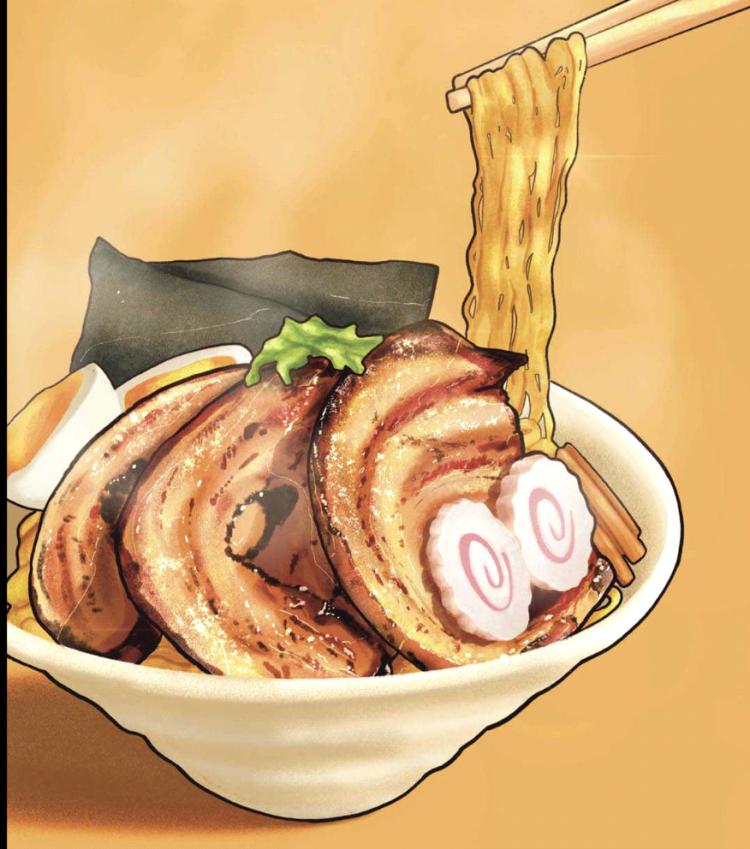
Miso Chashu Ramen
A Naruto-inspired ramen with rich pork bone broth, tender braised pork belly chashu, miso tare, infused aroma oil, and classic toppings including soft-boiled eggs, nori, bamboo shoots, and narutomaki fish cake.
Ingredients
| 3 1/2 pounds (1.6 kg) | pork bones (Pork Bone Broth) | |
| 8 cups (1.9 L) | water (Pork Bone Broth) | |
| 1 piece | dried kelp (kombu), 2 inches (5 cm) square piece | |
| — | dried bonito flakes (katsuobushi), to taste | |
| 1 1/2 pounds (680 g) | pork belly (Tender Chashu / Braised Pork) | |
| 2 teaspoons each | salt and black pepper (Tender Chashu), each | |
| 2 tablespoons | 30 ml | oil, for cooking (Tender Chashu) |
| 2 1/2 cups (600 ml) | soy sauce (Tender Chashu) | |
| 2 cups (480 ml) | sake (Tender Chashu) | |
| 1 1/4 cups (300 ml) | mirin (Tender Chashu) | |
| 1 cup (220 g) | packed brown sugar (Tender Chashu) | |
| 1 1/2 cups (360 ml) | white miso (Miso Tare) | |
| 1/2 cup (120 ml) | soy sauce (Miso Tare) | |
| 1/2 cup (100 g) | sugar (Miso Tare) | |
| 1/4 cup (60 ml) | sesame oil (Miso Tare) | |
| 1 cup (150 g) | sesame seeds, puréed (or 1 cup, or 240 g, tahini) (Miso Tare) | |
| 10 | medium cloves garlic (3 1/2 ounces, or 100 g), minced (Miso Tare) | |
| 1 piece | ginger root (1 1/2 inches, or 4 cm, long), minced (Miso Tare) | |
| 1 cup (240 ml) | canola oil (Infused Aroma Oil) | |
| 2 | scallions, trimmed and sliced in half lengthwise (Infused Aroma Oil) | |
| 1 piece | ginger root (1 inch, or 2.5 cm, long), thinly sliced lengthwise (Infused Aroma Oil) | |
| 6 | single-serving packs fresh ramen noodles (5 to 6 ounces, or 142 to 170 g, each) or dried ramen noodles (3 ounces, or 85 g, each) (For Assembly) | |
| 6 | soft-boiled eggs (For Assembly) | |
| 2 | sheets dried seaweed (nori), cut into 6 squares each (For Assembly) | |
| — | pickled bamboo shoots (menma), to taste (For Assembly) | |
| 12 | slices (1/8 inch, or 3 mm, thick) fish cake (narutomaki) (For Assembly) | |
| 2 | scallions, thinly sliced (For Assembly) |
Instructions
Special tools: Pressure cooker; Kitchen twine; Kitchen torch (optional).
- To make the pork bone broth: In a large pot, place the pork bones and add enough water to cover them. Boil the bones for 10 minutes, then strain and scrub them in running water to remove any shards and impurities.
- Add the bones to a pressure cooker with the 8 cups (1.9 L) water and pressure-cook for 1 1/2 hours. You may also boil the bones in a pot on the stovetop over medium-high heat for 12 to 18 hours, making sure to replenish the water throughout to keep the bones covered and skimming the scum occasionally.
- Once finished cooking and the broth is milky white and slightly thickened, open the pressure cooker, add the dried kelp and a handful of bonito flakes, turn off the heat, and let steep for 30 minutes. Strain the broth through a fine-mesh strainer, discarding the bones, and set aside.
- To make the tender chashu: Place the pork belly on a cutting board and trim and discard the skin layer. Rub the pork belly all over with the salt and pepper, then roll it tight and tie it closed with kitchen twine: Equally space four pieces of twine across the width of the pork belly and tie each one around it. Then, using one piece of long twine, tie it along the length of the pork belly to secure the roll.
- In a large skillet, heat the oil over medium heat just until smoking, then panfry all sides of the pork belly until a deep golden brown.
- Transfer the pork to a clean large pot and add the soy sauce, sake, mirin, brown sugar, and enough water to almost submerge the meat. Place a piece of parchment paper over the chashu mixture to cover, then cook without a lid. Bring the contents of the pot to a boil over medium-high heat, then reduce the temperature to a simmer and cook for 1 hour, turning the chashu every 10 minutes to achieve beautiful color throughout. After 1 hour, remove from the sauce and let the meat rest for 2 hours before slicing. (Do not discard the chashu sauce; see Notes below for use for the sauce.)
- To make the miso tare: In a large bowl, mix all the miso tare ingredients until homogenous.
- To make the infused aroma oil: In a small pot, heat the canola oil over medium heat, then add the scallions and ginger and cook until browned, about 2 minutes. Remove from the heat and discard the scallions and ginger. Set aside.
- To assemble the ramen: Cook the fresh ramen noodles according to the package instructions. Warm the pork bone broth over medium-high heat.
- Cut the chashu into 1/4-inch-thick (6 mm) slices. Torch the chashu surface until browned over a direct flame or using a kitchen torch (this is optional but recommended).
- Assemble the ramen in this order: In each ramen bowl, add 2 teaspoons of infused aroma oil, 1/4 cup (72 g) of miso tare, and 1/4 cup (60 ml) of pork broth. Dissolve the miso tare in the broth, then add more broth to taste. Gently place the ramen noodles in the broth. Lastly, add the toppings, in generous amounts: chashu slices, 2 soft-boiled-egg halves, 2 nori sheets, some pickled bamboo shoots, 2 sliced fish cakes, and a sprinkle of sliced scallions.
Notes: • The pork bone broth, chashu sauce, miso tare, and infused aroma oil can be refrigerated in airtight containers for up to 1 week, so you can make them in advance or save the leftovers for later. • Use the leftover chashu sauce to make soy sauce eggs for ramen. Let the sauce cool to room temperature, transfer to a bowl, and submerge the peeled soft-boiled eggs. Cover and refrigerate for 2 days for perfectly seasoned eggs.