
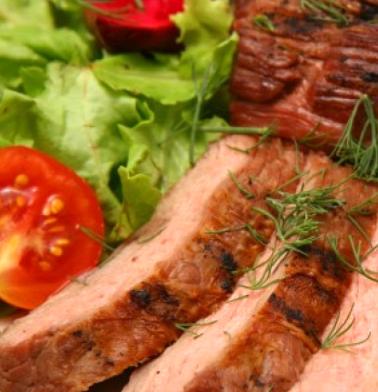
My Father's Creamy Veal Stew with Blueberries
A father's personal, free-form recipe for a creamy veal stew: the meat is cooked to your taste (boiled, roasted or fried), served in a smooth purée of potatoes and carrots, enriched with fresh tomato and enlivened with blueberries or dried prunes.
Ingredients
| — | veal (or other meat), cooked to taste | |
| — | potatoes | |
| — | carrots | |
| — | seasonal vegetables (zucchini, cauliflower, green peppers, etc.) | |
| — | wine (a few drops) | |
| 1-2 tbsp (paste) | fresh tomatoes, grated (or tomato paste) | |
| 1-2 tsp | 5–10 ml | sugar |
| several heads | onion | |
| — | cooking oil | |
| — | vegetable seasoning or stock | |
| — | salt | |
| — | basil or thyme | |
| — | blueberries or dried prunes |
Instructions
- Prepare the meat to full doneness however you like — boil it (as I did with the veal), roast it or fry it; it makes no difference as long as it is done to your taste.
- Separately boil potatoes, carrots and other seasonal vegetables (I have also added zucchini, cauliflower, green peppers and whatever I happen to have). The quantity and proportion depend on your taste, but I recommend the potatoes and carrots be the leading ingredients.
- Once the vegetables are boiled, purée them (do not do it at high speed, or the purée will become like jelly or soft rubber). Since carrots are hard to blend smooth, add a few drops of alcohol (I use wine) and blend the purée again.
- To the finished purée add grated fresh tomatoes (or, if you have none, no more than one or two tablespoons of tomato paste) and one or two heaped teaspoons of sugar. Stir well until you get a homogeneous mixture.
- Now back to the pot. Slice a few onions, preferably coarsely — even into rings (in my family we have an onion "opponent", so in the photo it isn't visible as it is finely chopped). Heat a little oil and add the onion, letting it lightly sauté, then immediately add water just to cover it and let the onion braise well (it would be good to add a vegetable seasoning — for example a Maggi-type one, or stock). Once the onion is braised, add the already-prepared meat and, as the grandmothers say, leave it just to "catch the fire", i.e. one or two stirs. This stage is on low heat. Do not turn the burner to six and overdo it — this dish is generally cooked on low heat.
- At this point people start wringing their hands over how much water to use, worrying the purée will thin out and turn from a creamy stew into a soup. Don't worry — put in even two litres of water, no problem. Only, once the onion and meat are cooked, remove all the water. Then use it to thin the purée to the required thickness and carry on. And what to do with the remaining water? That leftover water has actually turned into a light stock (a whole other topic).
- Now for the purée. If it is very thick, take some of the stock in which the onion and meat were braised and stir lightly, then add the purée to the pot. Immediately add the herbs (I use basil or thyme; use what you prefer). Taste for salt and adjust, and after about 4-5 minutes remove from the heat.
- This dish can also be made as a sauce — then there is no meat and the onion is chopped very finely. If you have leftovers from the previous dinner, such as fried meatballs, grilled sausage or boiled frankfurters, this is a way to enrich the assortment.
- I make versions in which I add blueberries or dried prunes. My wife washes, portions and freezes blueberries every summer. Even though we use a purée of potatoes and carrots, there is no problem adding boiled, coarsely chopped ones to the dish. If you like more exotic dishes, make the purée entirely of carrots and red beetroot (here the ratio is 3:1 in favour of the carrots). Boiled eggs halved and topped with carrot-and-beet sauce are wonderful — and adding a spoon of mustard gives a bold flavour.