
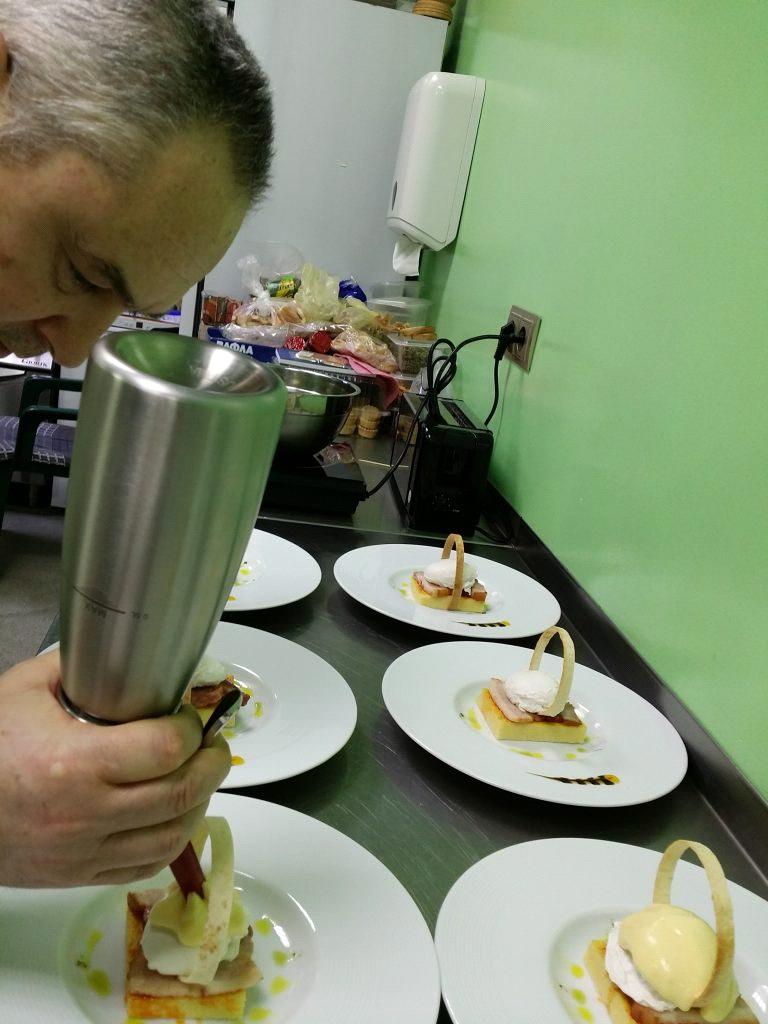
Hollandaise Sauce (Sous Vide)
Auguste Escoffier expanded and refined Careme's sauces in his 1903 book "Le Guide Culinaire", adding tomato sauce and hollandaise to the mother sauces of French cuisine. Today many home cooks (and not only them) struggle to make hollandaise: from the high heat, even in a bain-marie, it splits and turns lumpy. You can avoid this problem by making hollandaise also in a water bath, but... sous vide. This method keeps the sauce at a constant, controlled low temperature, guaranteeing a perfect result every time.
Ingredients
| 50 ml | White wine vinegar |
| 30 g | Shallot |
| 150 g | Butter |
| 80 g | Egg yolk (4 pcs) |
| 50 ml | Water |
| 20 ml | Lemon juice |
| — | Pinch of salt |
Instructions
Cooking temperature - 75°C /167°F/. Cooking time - 00:30 h.
- Set your sous vide to 75°C /167°F/.
- Pour the white wine vinegar into a saucepan. Coarsely chop the shallot and add it to the vinegar. Cook until reduced by half. Strain and set aside to cool slightly.
- In a ZIP bag place the butter, egg yolks, water, lemon juice, add the reduced vinegar and mix well /massage the bag/.
- Carefully lower the ZIP bag into the water bath, using the water pressure to push the air upward and create a vacuum /Archimedes' principle/. Once the air is pushed out, close the ZIP bag and clip it to the wall of the sous vide with a peg.
- Cook 00:30 h. (30 minutes) at 75°C /167°F/.
- If you are not using the sauce right away, you can leave it in the water bath for up to 1 hour, lowering the temperature to 60°C.
- Pour the warm mixture into a siphon. Charge with 2 N2O cartridges and shake vigorously.
- With the siphon place your perfect hollandaise sauce onto eggs Benedict, vegetables, fish or meat.
TIP: The best way to quickly bring the temperature down from 75°C to 60°C is to add cold water or ice cubes to the warm water bath of the sous vide and reset it to the new temperature so it maintains it. At the same 60°C in the water bath you can also place the already-filled siphon and keep it warm while you prepare the main dish, for example. If you have sauce left in the siphon, cool it in an ice bath and store in the fridge for up to 2 days.
The recipe presented uses a siphon to emulsify the sauce, but if you do not have one, you can use an ordinary hand-held immersion blender.
As we said, hollandaise is a mother sauce from which, by adding different products, we can get its derivatives. For example, adding tarragon gives bearnaise sauce, chantilly - (with cream), choron - (with tomatoes), as well as the exotic Maltese sauce with orange juice. If you want to flavor the sauce, try adding various herbs and spices, garlic, nutmeg and even hot red pepper - everything works well. You can also replace the white wine vinegar with red wine vinegar or sherry vinegar and the hollandaise made this way will be a tasty addition to red-meat dishes.
Recipe courtesy of www.greatbritishchefs.com