Preparation
Ingredients
Instructions
PORTIONING FOOD FOR SOUS VIDE We generally recommend cutting food into small serving sizes whenever possible for sous vide applications so the center of the food reaches desired temperature faster. There are two reasons for this:
Reduced cooking time This is important for delicate foods such as fish and very tender cuts that will become mushy or pappy if held too long in the bath. The smaller the food piece, the faster its center will reach final cooking temperature. Tough cuts (of intact muscle) can be left in larger portions since they benefit from longer cooking times (and the interior of intact muscle meat is generally considered sterile).
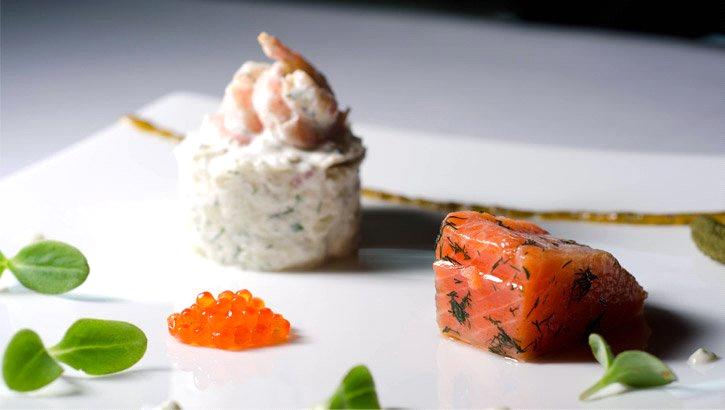
If you were to cook and hold a piece of beef at 140°F/60°C in a sous vide bath for, say, an hour or two after its center has reached final cooking temperature, it would be virtually indistinguishable from beef held at that temperature for just 15 minutes. Fish is different. Fish can go mushy when held at relatively low temperatures for just minutes too long, so fish should be removed from the sous vide bath as soon as its center reaches target temperature but beef could be held in the bath for several hours until you are ready to serve it. (In the recipe for Table Smoked Tasmanian Ocean Trout, the star fish is cooked sous vide for just 20 minutes at the low temperature of 109°F/43°C.)
Staying out of the danger zone Another reason to cook small portions is to avoid leaving areas of a large piece of meat in the "danger zone" of microbial spoilage for too long. The general rule of thumb is to avoid leaving food in the temperature range from 40°F/4°C to 140°F/60°C for any extended period. For example, if you were planning to cook a cut of pork to 150°F/65°C, you could hold it in the sous vide bath for hours safely. But if the cut was so large that the heat didn't effectively penetrate throughout, there could be zones that would stay well under 140°F for hours, increasing risk of microbial spoilage.
SEARING FOOD BEFORE COOKING SOUS VIDE One of the hallmarks of a great steak is the beautiful brown sear on its outside. Since sous-vide cooking never reaches high temperatures, you must always sear sous-vide cooked meat separately to achieve excellent browned flavor. Searing before cooking a piece of meat sous vide has several benefits:
- Pre-searing kills most of the microbes on the surface of the meat, making cooking sous vide safer.
- Searing the meat before sous vide cooking allows the created flavor compounds to penetrate the meat during the sous vide process.
- Pre-searing when the meat is cold reduces the chances of overcooking beyond the edge.
- Pre-searing firms soft meats and seafood so they hold their shape better when vacuum packing. The disadvantage of pre-searing is that most foods will have to be seared again after they are cooked sous vide, since cooking softens the crust. To restore the crust, sear the meat right before serving. Fish and seafood can usually be just pre-seared since a crust is not necessary in most cases. Searing lamb before cooking sous vide is not recommended as it causes unpleasant flavors generated by unwanted reactions while cooking sous vide for long times; the same effect may happen with other grass-fed animals.
BLANCHING FOOD BEFORE COOKING SOUS VIDE It is generally recommended to blanch fruits and vegetables before cooking sous vide to preserve the color and texture. Bring water to boil and dip the fruits and vegetables for 2 seconds to destroy the enzymes that cause browning. Blanching can also be used with meat and seafood to kill bacteria on the surface and firm them up.
SALTING FOOD BEFORE COOKING SOUS VIDE Sous vide doesn't work like traditional salting. If you salt food before cooking it sous vide, holding the food at low temperature for a long time inadvertently cures the food, resulting in a dense, pickled texture. It is therefore generally better to add salt after the sous vide cooking phase, unless you're intentionally trying to create a cured texture. Salting a steak before cooking sous vide is only recommended when it'll be served immediately.
SEASONING BEFORE COOKING SOUS VIDE You can add dry or liquid condiments to the food before vacuum packing. Herbs, marinades, spices, lemon slices, etc. will infuse into the food while cooking. Use less quantity than usual because flavors will be more intense thanks to the vacuum packing and the long cooking time. When using a clamp-style vacuum sealer, liquids will get sucked into the machine; to avoid this, freeze any seasoning liquids before placing them in the bag. Vacuum chambers can handle liquids without any problems.
SMOKING BEFORE COOKING SOUS VIDE When cooking sous vide and you want to smoke the food, it may be better to do it before cooking it. Uncooked meat reacts with smoke easier than cooked meat; the aromas penetrate during cooking; and starting with a cold cut minimizes the risk of overcooking while smoking. However the smoke taste will be milder than if smoked after cooking sous vide.
COOKING SOUS VIDE FROM FROZEN You can cook food sous vide that is frozen without having to thaw it first. You will just have to add 30 min to 1 hour to cooking times to allow the food to thaw in the sous vide water bath.
BAGGING FOODS FOR SOUS VIDE COOKING You don't need a vacuum sealer to cook sous vide, but there are several benefits to vacuum sealing:
- Vacuum-sealing allows for efficient heat transfer from the water (or steam) to the food.
- It prevents evaporative losses of flavor volatiles and moisture; enclosed spices transmit flavor more intensely and it retains all juices from proteins.
- It helps inhibit off-flavors from oxidation (fat can become rancid when exposed to air).
- It increases shelf-life by eliminating the risk of re-contamination during storage. Special vacuum bags are useful for large batches or awkwardly-shaped items. An in-depth analysis concluded that both vacuum bags designed for sous vide and Ziploc brand bags sold in the United States are safe for sous vide. Reusable silicone bags are an option for those who prefer to avoid disposable plastic.
From http://www.molecularrecipes.com/sous-vide-class/preparing-food/