Tricks (Sous Vide Special Applications)
A collection of advanced sous vide techniques and tricks: reheating/holding temperature, low-temperature infusion, ripening fruits and vegetables, low-temperature cooking for insurance and for long times, and high-temperature scalding/blanching in vacuum bags.
Ingredients
Instructions
Reheating or Maintaining Temperature Although the best dishes in molecular gastronomy are almost always best served right after they are created, sometimes it's just not possible to juggle all the different components of a dish at the exact right temperatures. Sous vide temperature control makes it easy to make a delicious sauce ahead of time and either cool it and then reheat it, or hold it at serving temperature until it's needed. You can also use the sous vide water bath to maintain a hot foam in an iSi Whip at serving temperatures. For iSi Whip hot applications we recommend the convenient Whipper Clip to hold the iSi bottle in the water bath and the iSi Heat Protection Sleeve. Sous vide heating can also be used for delicate ingredients that need to be gently reheated without direct heat. For example, if you needed to make a batch of these Liquid Parmesan Gnocchi ahead of time, the best way to reheat them would be to put them in a zip-top bag and bring them up to temperature in a water bath.
Low Temperature Infusion with Sous Vide This technique speeds up the infusion process of the traditional cold infusion technique by applying precisely controlled heat preserving some of the delicate fresh aromas that could be ruined with the hot technique. This technique is also ideal for alcohol because the infusion is done in a sealed pouch preventing the alcohol from escaping. The alcohol also reduces bacteria growth. Combine herbs or spices with alcohol in an air-tight plastic bag and submerge in a hot water bath for a quick infusion. This technique prevents the alcohol from cooking off while allowing infusion much more quickly than at room temperature. An interesting application of this technique in the photo below: Balsamic Infused Watermelon Salad with Feta, Thyme and Heirloom Tomatoes.
Ripening Fruits and Vegetables with Sous Vide A warm bath at 38 °C (100 °F) can be used to ripen most fruits and vegetables. The enzymes in fruits and vegetables that normally cause ripening accelerate their reaction at warmer temperatures. That's why fruit ripens faster at room temperature than in the fridge.
Low Temperature Cooking For Insurance Similar in concept to reheating, low-temperature cooking can be used to ensure the perfect texture on foods when you know you won't have time to carefully prepare them at the moment of serving. For example, imagine you needed to simultaneously serve 3 different thick steaks at the same time, 1 cooked to medium-rare, one to medium, and one to well-done. Normally, you would have to know exactly how long it would take to cook each steak on your stove and work backward to figure out when to start cooking each. Using a water bath at the moment also wouldn't work, since one water bath can only be set to one temperature. A better approach would be to precook all the steaks to their desired temperatures ahead of time (don't forget to pre-sear!) with sous vide. You can then label the bags with their doneness and either cook them from chilled storage, or use a warm water bath set to serving temperature (around 120°F) to bring them up to temperature. This technique allows you to produce any doneness desired with minimal difficulty and less time needed before serving. In this recipe for Peruvian-Inspired Filet Mignon, the steak is cooked sous vide to an internal temperature of 125°F/51°C, then grilled before serving. The steak could also have been chilled and then reheated and grilled by using the sous vide for insurance technique.
Low Temperature Cooking For Long Times The final interesting technique we'll share deals with what happens to food after a long time at relatively low cooking temperatures. Perhaps one of the most interesting recipes to come out of sous vide technology are 72-hour shortribs, a tough cut of meat that is cooked at just 144°F/62°C for three whole days. Cooking the meat to such a low temperature guarantees that it will have the texture of medium-rare steak. But it takes 72 hours to break down the collagen in shortribs at those temperatures. Any less and the dish would end up chewy and tough. To see a similar (but much less exhausting) process in action, consider this recipe for Apples, Olive Oil Biscuit and Ginger Custard. In it, the soft apple balls are cooked for 3 hours at 167°F/75°C. This long cooking time turns the pectin in the apples to a soft gel without breaking down the overall structure of the balls into an unappetizing applesauce.
High Temperature Scalding or Blanching This is an alternative application of vacuum bags rather than sous vide but since you may already have all the equipment, here it is. Cooking in a bag does not always have to be done at low temperatures. Pioneering chefs Alex Talbot and Aki Kamozawa discovered a novel use for sous vide bags: vacuum seal vegetables before blanching them. Although the temperatures used are the same as in traditional blanching, the vacuum bags seal in the nutrients from the vegetables that would normally diffuse into a pot of boiling water. The result is vegetables that are perfectly cooked, bright green, and full of nutrition. From http://www.molecularrecipes.com/sous-vide-class/sous-vide-special-applications/
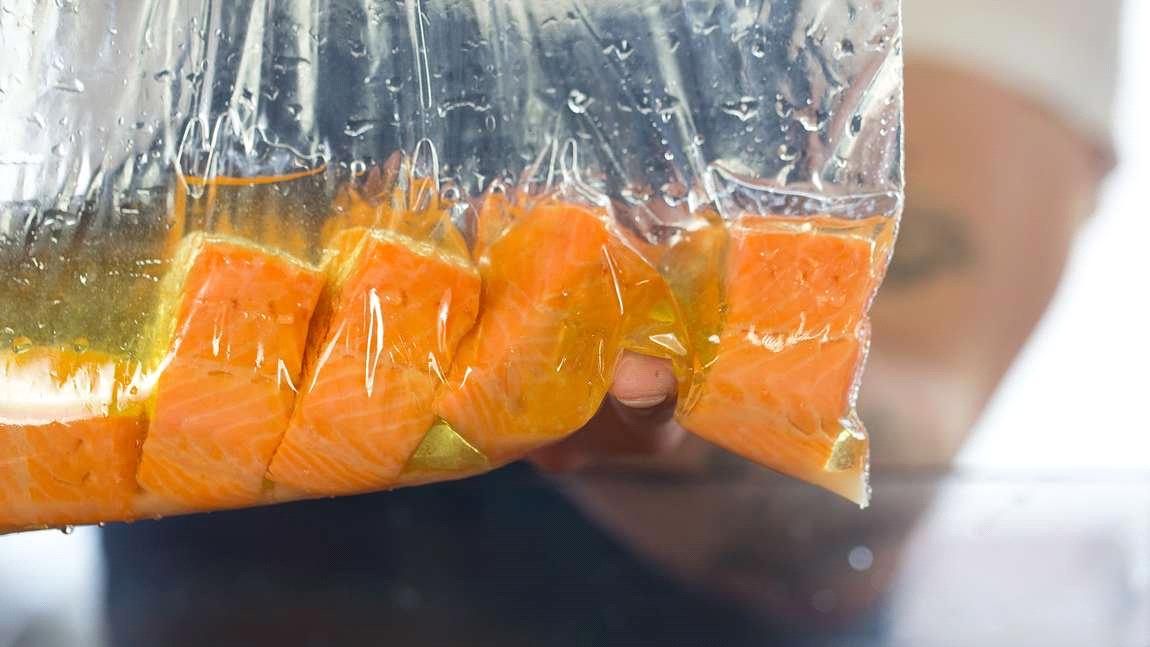
Always add oil. When cooking proteins sous vide, you always want to add oil to the bag. Adding ample oil is especially important with delicate foods or small pieces. The oil will help keep things moving in the bag—preventing food from getting stuck in the seams, preserving shape by helping juices run off, and ensuring that any herbs or aromatics you add won't get stuck to your food and "stamp" it. What kind of oil, you ask? We often use olive oil, but for delicately flavored fish and other proteins, you might opt for something more neutral, such as a good-quality canola oil. (Butter works too.)
Avoid overcrowding. You can often cook several portions of food in one ziplock-style bag, cutting down on cost and waste. Just be sure you don't stuff it all in there. Allowing a little room for the pieces to move around will prevent them from fusing freakishly together and help preserve the pretty edges we love to see on our chicken breasts and fish filets. From https://www.chefsteps.com/activities/a-complete-guide-to-sous-vide-packaging-safety-sustainability-and-sourcing