
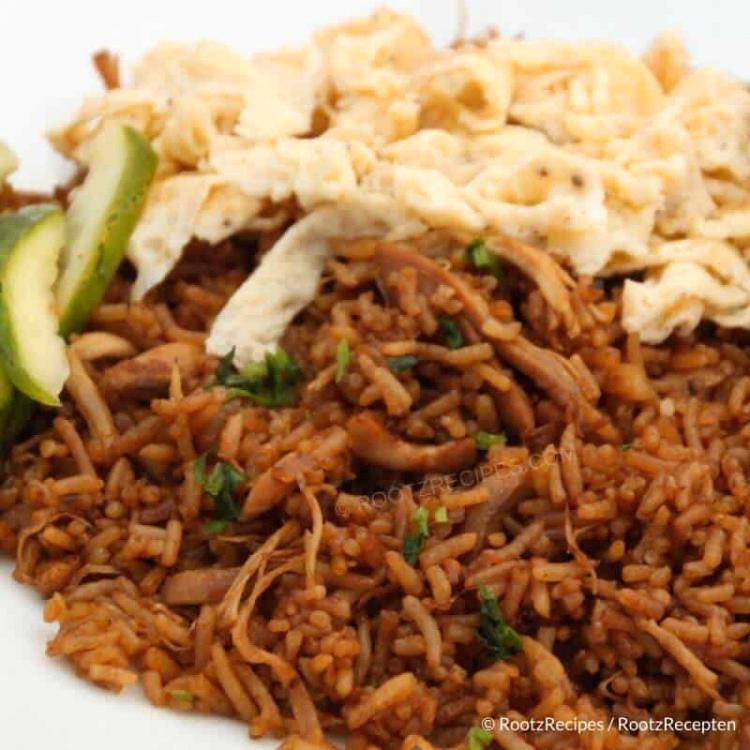
Surinamese Nasi
Surinamese food. Although filed under the book's Indian section, nasi is a Surinamese dish of Javanese-Indonesian origin. This is a very basic recipe using a minimum of herbs and spices; most Surinamese households add extra herbs and spices (such as ground coriander seeds and galangal root) to create their own signature nasi. Note: the cup measurements are approximate — the recipe is most accurate using weight measurements.
Ingredients
| 3 cups (500 g) | uncooked rice (or precooked/leftover rice based on 3 cups uncooked) | |
| 1 | bouillon/stock cube (for rice) | |
| 1 tbsp | 15 ml | kecap manis sweet soy sauce (for rice) |
| 1 clove | garlic (for rice) | |
| 1 pound (500 g) | chicken fillet, cleaned to preference | |
| 1 clove | garlic (for chicken) | |
| 1 piece | ginger, about the size of a thumb (for chicken) | |
| 1 tbsp | 15 ml | kecap manis sweet soy sauce (for chicken) |
| 1 | bouillon/stock cube (for chicken) | |
| 1 twig | flat leaf parsley (for chicken) | |
| 1 1/2 tablespoon (20 g) | butter (for chicken) | |
| 1 cup (200 ml) | water (for chicken) | |
| 3 tsp | 15 ml | vegetable oil (for frying nasi) |
| 1 | onion, finely chopped | |
| 1 tsp | 5 ml | shrimp paste (trassi) |
| 2 cloves | garlic, crushed | |
| 1 tsp | 5 ml | ginger, finely chopped |
| 1/2 tsp | 2.5 ml | kencur powder, optional |
| 1 piece | lemon grass (or 1 tsp lemon grass powder) | |
| 1 tsp | 5 ml | galangal (laos), finely chopped |
| — | salt, to taste | |
| 2 tbsp | 30 ml | kecap manis sweet soy sauce (for frying) |
| 3 tbsp | 45 ml | soy sauce (salty) |
| 1 handful | flat leaf parsley, finely chopped | |
| 5 | eggs, fried as omelet, cut in strips (side, optional) | |
| — | fried plantains (side, optional) | |
| — | pickled cucumber (side, optional) |
Instructions
Rice (option 1: precooked rice)
- Take your leftover or day-old prepared rice out of the fridge.
Rice (option 2: uncooked rice)
- Prepare the rice as instructed on the packet but include the bouillon/stock cube, kecap, garlic and ginger. When the rice is done, remove the garlic. You can use the rice straight away to prepare the nasi or refrigerate it overnight so the rice dries out a bit and it's easier to handle.
Chicken
- Add all the ingredients (except water) to a pan with a thick bottom.
- Add the water till the chicken is just covered, add more or less water as needed depending on your pan.
- Bring the water to a boil and cook the chicken on medium heat till it's done.
- Take the chicken out of the pan and leave it to cool. Once cooled, pull apart the chicken with two forks to get finely thin strips of chicken fillet.
- Boil down the leftover broth of the chicken till it starts to thicken, add the pulled chicken strips and mix till all the moisture is absorbed.
Frying Nasi
- Add oil to a skillet or hot pan and heat it up.
- Add onion and fry till it starts to get translucent. Add the shrimp paste and press it to break down and stir with the onions.
- Add garlic and finely chopped ginger and stir to fry.
- Add bruised lemon grass and stir fry.
- Add chicken and stir fry.
- Add galangal and kencur and stir fry.
- Add rice and stir fry.
- Add kecap and soy sauce.
- Stir fry till all is thoroughly combined and has a nice light brown color.
- Remove the big pieces of lemon grass.
- Finish with salt and pepper to taste.
- Sprinkle with finely chopped flat leaf parsley.
- Serve with a side dish of your choice (fried egg omelet, fried plantains, pickled cucumbers, roasted chicken etc).
Notes: Leftover rice — The best rice to use for nasi is day-old rice refrigerated overnight. TIP: freeze leftover rice in a Ziploc bag; thaw before using. Kecap Manis is an Indonesian sweet soy sauce with a syrupy, molasses-like flavor. Kencur is similar to ginger and galangal, richer in flavor; if unavailable, leave it out. Shrimp paste adds depth; if unavailable leave out or use a tablespoon of fish sauce. Storage — keep in the fridge about 2 days (reheat in microwave, sprinkle water if dry); freezes well for about 3 months. Serving — serve with roasted chicken or Moksi Meti (mix of roasted meat), bakabana (fried plantain) and pickled cucumber. Serves 4–6 depending on portion size.