
Foie Gras Terrine (Терин от гъши дроб)
COOKING TEMPERATURE – 56°C /132.8°F/. COOKING TIME – 00:40 hours. There are many low-temperature recipes for foie gras terrine; the author liked this one from the well-known Russian culinary blogger Alexey Onegin. Note: in Bulgaria goose liver is not available — what is offered is duck liver — but the author keeps the original recipe title.
Ingredients
| 1 бр. | goose liver (foie gras) |
| 2 с.л. | Sauternes |
| — | Salt |
| — | Freshly ground black pepper |
Instructions
COOKING TEMPERATURE – 56°C /132.8°F/. COOKING TIME – 00:40 hours (40 minutes).
- If the liver is frozen, leave it overnight in the fridge to thaw.
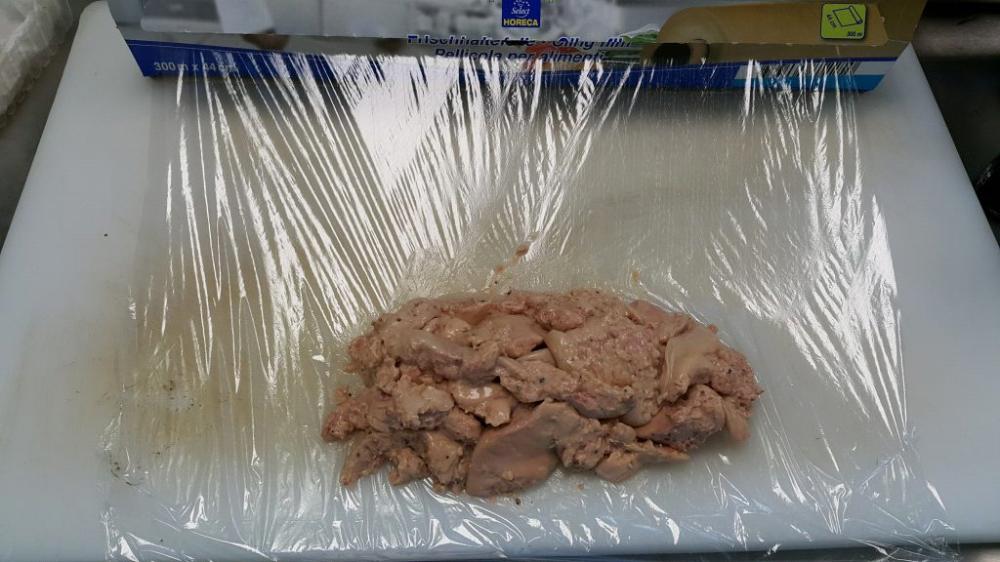
- Clean the goose liver from the membranes and veins. Don't worry if it breaks into pieces — during cooking they will stick back together.
- On a sheet of PVC cling film, spread the cleaned liver in an even, not too thick layer in a rectangular shape. Season with salt, freshly ground black pepper and pour over the wine. Using the film, start rolling the spread liver into a roll about 6 cm in diameter, trying to push the air out toward the ends. Grab the free film at both ends and twist it (as you would wrap a candy), making at least 7-8 layers. Once the packet is tight enough, tie both sides with kitchen twine. Refrigerate for at least 2 hours so the liver absorbs the aromas.
- Set your sous vide to 56°C /132.8°F/.
- Cook for 00:40 hours (40 minutes) at 56°C /132.8°F/.
- When the timer goes off, cool the terrine in an ice bath for at least 30 minutes, keeping enough ice in the water the whole time.
- Refrigerate for at least 12 hours so the terrine sets well. Serve in slices with toasted bread and blueberry jam.
TIP: First of all, in Bulgaria goose liver is not available; what is offered is duck liver. I don't want to change the recipe name, so I keep the title, but with this important clarification. Do not thaw the liver at room temperature or by pouring/soaking it in warm water. Instead of Sauternes you can use another dessert wine. Some prefer to add 20 g of aromatic French cognac, others add raisins pre-soaked in rum or cognac. I stuck to the traditional recipe and added wine, but first heated it to drive off the alcohol. If a lot of air remains in the middle after the first wrap, prick with a toothpick where the air has gathered and push it out by pressing. This pricking should only be done during the first wrap with the film; afterwards it is not recommended because fat will start to leak. Wrap and tie the ends of the terrine well with twine. The wrapping technique is the same as for making "chicken roll," which you can see here. I do not vacuum-seal the terrine additionally; I place it in the sous vide water bath wrapped only in cling film. After it has rested in the fridge and cooled well, you can slice it with a thin sharp knife. You can quickly dip the knife in a container of warm water to ease cutting. Around the slices you will see a 2-3 mm halo of set fat from the liver. If you wish, you can carefully remove it with the tip of the knife. When the terrine is well chilled the fat comes off easily, but if it has stood at room temperature you will struggle to remove it. Attention! – Before serving, make sure you have removed all layers of the cling film from the sliced terrine!